

唐顿庄园


分类: 越狱第四季
守法公民
Takaichi reportedly mulls skipping visit to notorious Yasukuni Shrine on anniversary of WWII surrender; experts see political maneuvering, not historical remorse_我的网站

A | Major housing industry groups voiced "profound concern" in a letter this week urging the Federal Reserve to stop raising interest rates.The rare public admonishment from top business advocates -- including the National Association of Realtors and the National Association of Home Builders -- underscores a dramatic slowdown in the housing market due in large part to rising interest rates.The letter arrives roughly three weeks before the Fed plans to make its latest rate-hike decision.Mortgage rates have reached their highest level in more than two decades and they have continued to rise. Data released on Thursday showed that mortgage rates increased for the fifth consecutive week, according to Freddie Mac."The speed and magnitude of these [mortgage] rate increases, and resulting dislocation in our industry, is painful and unprecedented," the letter from the housing groups said.Here's what to know about why real estate groups called on the Fed to stop raising rates:
What's happening in the housing market?
Sky-high mortgage rates have dramatically slowed the housing market, since homebuyers have balked at stiff borrowing costs and home sellers have opted to stay on mortgages that lock them into relatively low rates.Mortgage applications have fallen to their lowest level since 1996, the Mortgage Brokers Association said earlier this month.Sales of previously owned homes, meanwhile, have plummeted more than 15% compared to a year ago, the National Association of Realtors found in August.The slowdown has coincided with a sharp rise in costs for potential homebuyers.The average interest rate for a 30-year fixed mortgage has climbed to nearly 7.6%, Freddie Mac data shows.When the Fed initiated the rise of bond yields with its first rate hike of the current series in March 2022, the average 30-year fixed mortgage stood at just 4.45%.Each percentage point increase in a mortgage rate can add thousands or tens of thousands in additional costs each year, depending on the price of the house, according to Rocket Mortgage.What role is the Federal Reserve playing in the housing market slowdown?
An aggressive series of interest rate hikes at the Federal Reserve since last year has pushed up the 10-year Treasury yield, which loosely tracks with long-term mortgage rates.The Fed has fought elevated inflation with borrowing cost increases as it tries to slash price hikes by slowing the economy and choking off demand.While inflation has fallen significantly from a peak of about 9% last summer, price increases remain more than a percentage point higher than the Fed's inflation target.Price increases held steady in September, fresh data on Thursday showed, suggesting that elevated inflation remains resistant to the interest rate hikes.The persistence of elevated inflation has prompted the Fed to espouse a policy of holding interest rates at high levels for a prolonged period, which in turn has increased the 10-year Treasury yield and put upward pressure on mortgage rates.Moreover, the Fed expects to raise rates one more time this year, according to projections released last month.Speaking at a press conference in Washington, D.C., last month, Fed Chair Jerome Powell acknowledged the continued effect of interest rates on mortgages, noting that activity in the housing market "remains well below levels of a year ago, largely reflecting higher mortgage rates."What do the housing industry groups want the Fed to do?
Housing industry advocates want the Fed to take swift actions that reassure investors and other market participants of an end to the policies cooling the industry.Most notably, the industry groups want the central bank to release a statement saying that it has abandoned consideration of additional rate hikes.In their letter to Fed officials, the housing groups cautioned that a further slowdown in real estate could help tip the U.S. economy into a recession, scuttling the central bank's effort to achieve a "soft landing.""We urge the Fed to take these simple steps to ensure that this sector does not precipitate the hard landing the Fed has tried so hard to avoid," the letter said.。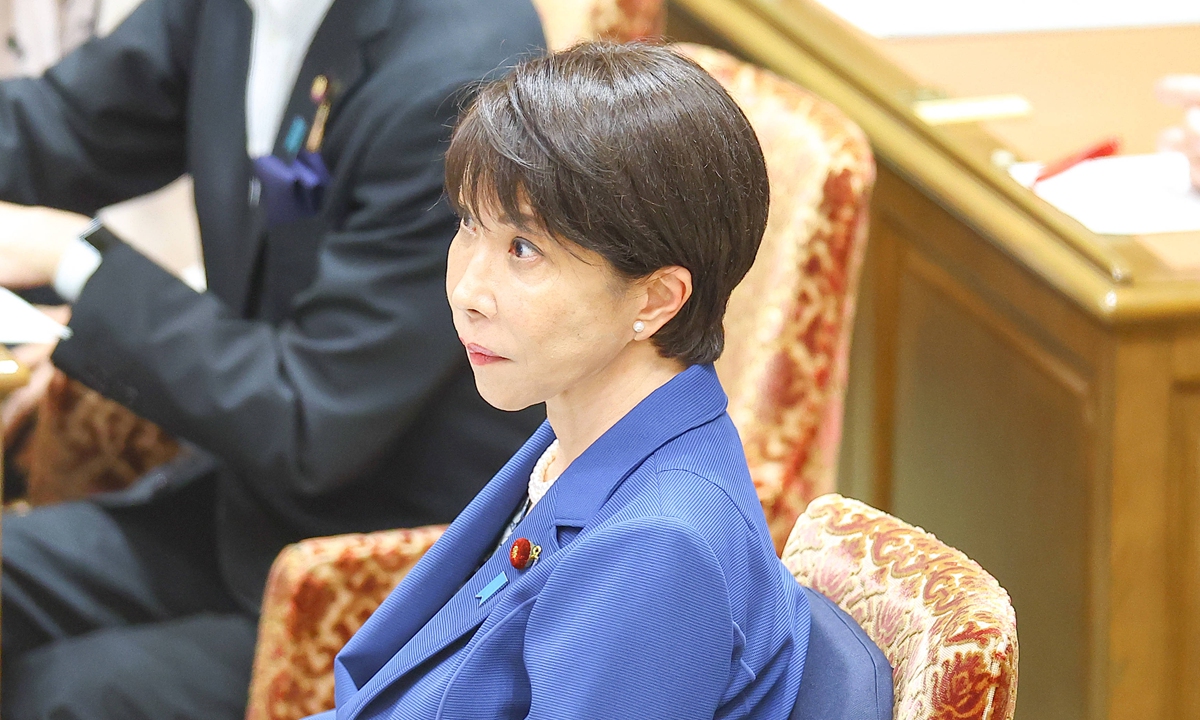
Due to concerns about fueling tension with China and South Korea, Japanese Prime Minister Sanae Takaichi is considering refraining from visiting the notorious Yasukuni Shrine, a symbol of Japanese militarism and wartime aggression, to mark the anniversary of Japan's unconditional surrender in World War II (WWII) on Saturday, Japanese media outlet Kyodo quoted sources familiar with the matter as saying on Wednesday.
Chinese experts said even if Takaichi forgoes a visit to the notorious shrine, the potential decision is merely driven by political calculations and diplomatic maneuvering, and could not be interpreted as a shift in her right-wing stance or as a sign of remorse over Japan's wartime aggression.
Such a visit to the shrine by Takaichi, a conservative known for her hawkish foreign policies, would certainly fuel tensions with China and create a rift in relations with South Korea, two countries that suffered under Japan's wartime military atrocities, Kyodo News reported.
Takaichi regularly visited the shrine before, even while serving as a Cabinet minister. But she has not visited the shrine since becoming leader of the ruling Liberal Democratic Party and prime minister in October, according to Kyodo news.
Chief Cabinet Secretary Minoru Kihara said at a press conference on August 7, when asked about a possible visit by Takaichi to the shrine around the anniversary, that "it is a matter for the prime minister to decide appropriately on her own," according to Japan's Jiji Press.
A source close to Takaichi told the Jiji that, "I don't think the prime minister will visit Yasukuni Shrine. It would complicate relations with South Korea."
Japan's Asahi TV reported that Takaichi may forgo the visit because she believes it is necessary to avoid triggering diplomatic tensions with South Korea, as well as with China.
A visit to the notorious shrine by a sitting Japanese prime minister would be a serious political incident, as it would reflect the leader's attitude toward Japan's wartime aggression and broader historical issues. Even if Takaichi chooses not to visit the shrine, it would not signal a retreat from her right-wing stance or a change in her views of Japan's wartime aggression against other countries, Lü Chao, an expert on Korean Peninsula issues at the Liaoning Academy of Social Sciences, told the Global Times. Rather, he said, the decision would largely reflect political calculations and diplomatic maneuvering.
Lü added that Takaichi could still make other symbolic gestures on the anniversary to cater to Japan's right-wing forces, whose support helped propel her to power. Such a move, he said, would underscore that her views of Japan's wartime history remain unchanged and serve as a reminder to neighboring Asian countries to remain vigilant about Japan's political direction.
Reporting on Takaichi's possible decision to forgo a visit to the shrine, South Korean newspaper Chosun Ilbo said on Wednesday that Takaichi had regularly visited the Yasukuni Shrine. "In the Liberal Democratic Party leadership election held in October last year, Takaichi also said that if appointed prime minister, she would visit the Yasukuni Shrine, noting that such visits should not become a diplomatic issue." However, since then, Takaichi has not visited in person and has only dedicated offerings in a private capacity, per the report.
In April, after Takaichi sent a ritual offering to the notorious Yasukuni Shrine, Chinese foreign ministry spokesperson Guo Jiakun said that China firmly opposes and strongly condemns Japan's latest negative moves related to Yasukuni Shrine and has lodged strong representations and protests with the Japanese side.
The Yasukuni Shrine is a spiritual tool and symbol of Japanese militarists responsible for the war of aggression. It is in fact a shrine for war criminals, noted Guo.
No sitting prime minister has gone to Yasukuni since Japan's late leader Shinzo Abe did so in 2013, drawing strong criticism from neighboring Asian countries.
Beyond Takaichi herself, some Japanese politicians and lawmakers have kept visiting the Yasukuni Shrine, triggering fierce pushback from peace advocates in Japan and the international community, Liu Jiangyong, a professor at the Institute of International Studies of Tsinghua University, told the Global Times, noting that such visits not only reflect the long-standing right-wing stance of Takaichi and other conservative politicians on historical issues, but also lay bare Japan's enduring militarist remnants.
Also in April, members of the conservative solidarity association, a group of conservatives in Japan's Liberal Democratic Party, and 166 Sanseito lawmakers from the Diet and local assemblies visited the Yasukuni war shrine.
In response, Lin Jian, Chinese foreign ministry spokesperson said that China strongly deplores and condemns such acts.
"By visiting the Yasukuni war shrine that honors Japanese Class-A war criminals year after year, these Japanese politicians seek to reverse the just verdict on Japanese aggression, and hereby whitewash Japan's war crimes and revive militarism. The Chinese people and people elsewhere who suffered under Japanese aggression will never accept that, neither will anyone in the world who stand for peace. As Japanese neo-militarism keeps gaining strength, the international community must stay on high alert and stand ready to stamp it out before it could wreak havoc in the region," said Lin.
。
Current article:http://rda.zeitujiangshaopen.pics/list_jnmr/3aw3gf2.html
Published on:22:11:54
- 这个乡镇“筹资”有方,奖励一位90后教师价值200万元住房_尤凡_教育
- PM releases 12th instalment of Rs 16K cr under PM-KISAN through Direct Benefit Transfer
- Indian Man Suffers Cardiac Arrest While Having Sex, Dies
- 马克西:只要球队能赢 我不会计较场均得分
- 谌贻琴在北京市调研时强调 加快建设足球青训体系 提升竞技体育后备人才培养水平


